
Vitamin C Reduces Lung Inflammation Due To Air Pollution
Background Air pollution has become the 2nd highest preventable risk factor for our health. Airborne particulate matter (PM) is a mixture of solids and aerosols composed of small droplets of liquid, dry solid fragments, and solid cores with liquid coatings. Fine particulate matter is defined as particles that are 2.5 microns or less in diameter (PM2.5).
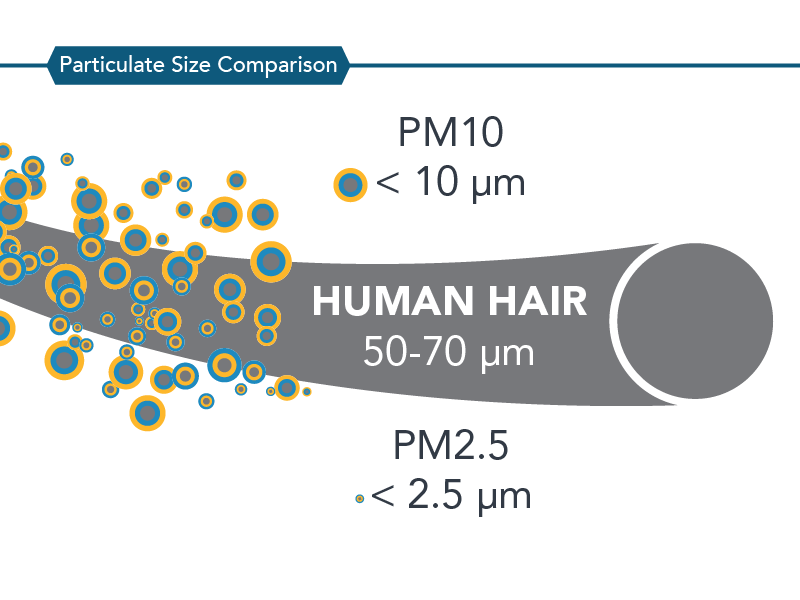
Comparison of PM2.5 compared with a human hair
The image above shows the size of PM2.5 compared to a human hair and it is easy to visualize that PM2.5 can be inhaled into the lungs. This can cause inflammation as well as contribute to lung disease including asthma, COPD, and lung fibrosis (scarring). Moreover, it is important to recognize that there is no safe level of air pollution that may be caused by car and truck traffic, wildlife fires, and various industries.
It is difficult, if not impossible, for people who live in or near cities with high levels of air pollution to avoid breathing in PM2.5. Thus, there is interest in protecing the lungs by eating foods and/or taking a supplement to reduce the effects of air pollution.
Study Dr. Xu Bai and researchers at the University of Technology Sydney in Australia examined the effect of Vitamin C in reducing lung inflammation caused by PM2.5 found in urban pollution.
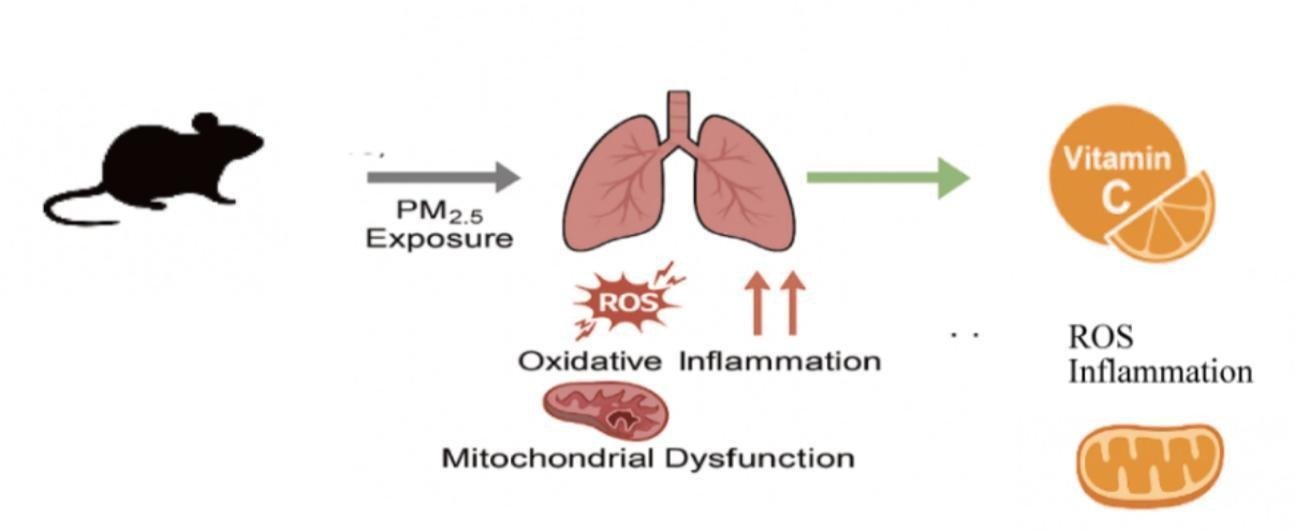
Mouse model to study the effects of Vitamin C on lung inflammation used by Dr. Bai and colleagues. The study results were published in the December 2025 issue of Environmental International, volume 206, 109929. ROS = reactive oxygen species.
In brief, male mice had daily exposures by inhaling PM2.5 thru the nose. Some mice had Vitamin C added to their drinking water, while another group did not.
Results Compared with no Vitamin C in their drinking water, the addition of Vitamin C prevented the increase in markers of lung inflammation including reactive oxygen species (ROS) in mice.
Conclusions In this mouse model, taking Vitamin C effectively prevented oxidative stress and inflammation due to inhaling PM2.5. According to the senior author of the study, Professor Brian Oliver commented, “For the first time we are providing hope for a low cost preventative treatment to a global issue affecting hundreds of millions of people.”
What are the effects of Vitamin C? Humans are unable to make (synthesize) Vitamin C. However, Vitamin C is required to making collagen, an essential component of connective tissue, which plays a role in wound healing. In addition, Vitamin C is an important antioxidant in the body and also promotes immune function.
What are the sources of Vitamin C? The best sources are fruits and vegetables, especially citrus fruits, red and green peppers, broccoli, strawberries, and Brussels sprouts.

Peppers are a great source of Vitamin C, especially red peppers.
My Comments For optimal lung health, first, avoid breathing irritants in the air including all pollutants (PM2.5). Second, eat fruits and vegeatbles rich in Vitamin C. Dietary supplements may be useful in cases where it is not possible to meet the needs for specific nutrients through food alone. However, it is important to remember that you will likely get enough Vitamin C if you eat a balanced diet.
According to the Mayo Clinic, experts generally recommend that women get 75 mg of vitamin C a day and men get 90 mg. In addition, the Mayo Clinic recommends limiting yourself to no more than 2,000 mg of Vitamin C a day.